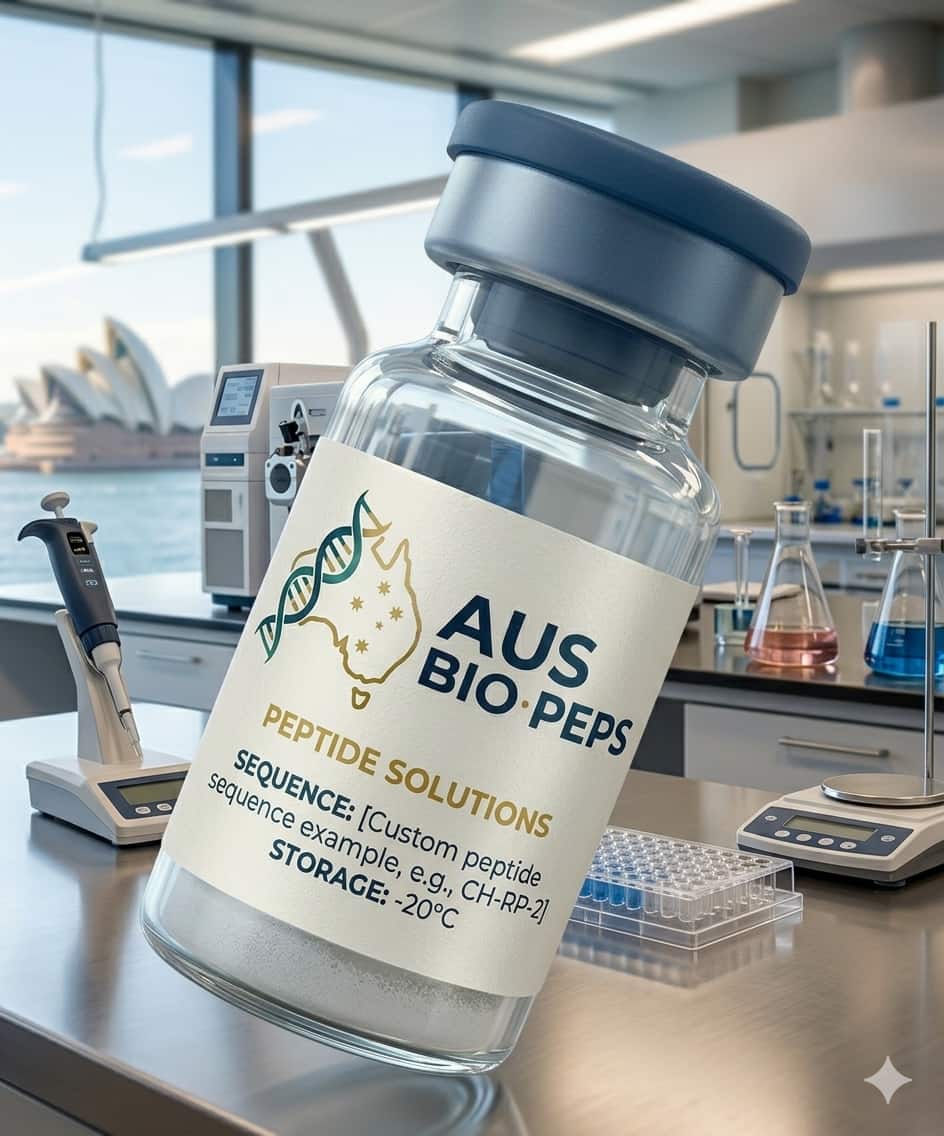
Introduction to Peptide Storage Guide
In the world of biochemical research, the integrity of your compounds is the foundation of your results. Peptides, while powerful, are inherently delicate organic molecules. For researchers and laboratories across Australia, understanding the nuances of peptide storage guide is not just a matter of logistics—it is a critical requirement for ensuring experimental reproducibility and data accuracy.
When you invest in high-quality research peptides, your primary goal is to maintain their structural integrity from the moment they arrive at your facility until the final stage of your study. This guide provides a comprehensive deep dive into the science of lyophilized peptide storage, refrigeration protocols, and the environmental factors that can compromise your research.
What Are Lyophilized Peptides?
Most high-purity peptides are delivered in a state known as lyophilization. To the uninitiated, this appears as a “cake” or a fine white powder at the bottom of a glass vial.
The Definition of Lyophilization
Lyophilization, or freeze-drying, is a dehydration process typically used to preserve perishable materials. The process involves freezing the peptide and then reducing the surrounding pressure to allow the frozen water in the material to sublimate directly from the solid phase to the gas phase.
Why Peptides are Freeze-Dried
Peptides are chains of amino acids linked by peptide bonds. In a liquid state, these bonds are highly susceptible to hydrolysis—a chemical reaction where water breaks the bonds, leading to rapid degradation. By removing moisture, we effectively “pause” the biological clock of the molecule.
Stability Benefits
-
Extended Shelf Life: Lyophilized compounds are significantly more stable than those in solution.
-
Ease of Transport: Being less sensitive to brief temperature spikes during transit makes them ideal for peptide storage in Australia, where climate conditions can be extreme.
-
Reduced Microbial Growth: Without water, the risk of bacterial contamination is virtually eliminated.
Why Proper Storage Matters: The Risks of Degradation
Understanding how to store peptides requires an appreciation of the forces that seek to destroy them. Peptides are sensitive to several environmental “stressors” that can lead to denaturation or chemical modification.
1. Temperature Sensitivity
Heat provides kinetic energy that can accelerate chemical reactions. Even a few hours at room temperature can begin the process of degradation for certain sensitive sequences.
2. Moisture Exposure (Hygroscopy)
Lyophilized peptides are often “hygroscopic,” meaning they readily absorb moisture from the air. If a vial is opened before reaching room temperature, atmospheric moisture can condense inside, leading to hydrolysis.
3. Light Exposure (Photodegradation)
Ultraviolet (UV) and even intense visible light can trigger the oxidation of specific amino acids like Tryptophan, Tyrosine, and Phenylalanine. This is why most research peptides are stored in amber vials or kept in dark environments.
4. Oxidation Risks
Oxygen in the air can react with the sulfur atoms in Cysteine and Methionine residues. This can result in the formation of disulfide bridges where they aren’t intended, fundamentally changing the peptide’s shape and function.
Best Storage Practices for Lyophilized Peptides
To maximize peptide stability, a tiered approach to storage is recommended based on your intended use timeframe.
Immediate Action Upon Receipt
When your shipment from Aus Bio Peps arrives, the vials should be transferred to a stable storage environment immediately. While our packaging is designed to withstand the rigours of Australian logistics, long-term stability requires controlled conditions.
Refrigeration Recommendations (Short-Term)
For peptides that will be used within 1–4 weeks, a standard laboratory refrigerator set to 4°C (39°F) is usually sufficient.
-
Location: Store vials in the center of the fridge, away from the door, to avoid temperature fluctuations.
-
Containment: Keep vials in their original box or a secondary light-blocking container.
Freezer Recommendations (Long-Term)
For storage exceeding one month, peptides should be kept in a freezer.
-
-20°C (-4°F): Suitable for most research peptides for up to 12 months.
-
-80°C (-112°F): Recommended for highly unstable peptides or for storage lasting several years.
Minimizing Temperature Fluctuations
Avoid “frost-free” freezers. These units undergo regular warming cycles to prevent ice buildup, which can subject your refrigerated peptides to damaging freeze-thaw cycles even while in a solid state.
Refrigerated vs. Frozen Storage: A Comparison
Choosing between the fridge and the freezer depends on your project timeline.
Critical Note: Never store peptides in a reconstituted (liquid) state in a standard freezer. The formation of ice crystals can shear the delicate molecular structure. If you must freeze a solution, use a “flash-freeze” method with liquid nitrogen, though this is generally discouraged for standard research applications.
Common Peptide Storage Mistakes
Even experienced researchers can fall into habits that compromise peptide shelf life. Avoid these common pitfalls:
-
Opening Cold Vials: This is the most common error. When you remove a vial from the freezer, you must allow it to reach room temperature (equilibrate) before opening the cap. This prevents condensation from forming on the powder.
-
Repeated Freeze-Thaw Cycles: Every time a peptide changes temperature, it undergoes physical stress. Aliquot your peptides if you plan to use them over multiple sessions.
-
Poor Sealing: If the stopper or cap is not airtight, moisture and oxygen will seep in. Ensure caps are tightened and consider using Parafilm for extra security.
-
Exposure to Light: Leaving vials on a laboratory benchtop under fluorescent lights for extended periods can lead to rapid oxidation.
Storage Equipment Recommendations
Investing in the right hardware ensures your research peptides in Australia remain potent.
-
Laboratory-Grade Refrigerators: Unlike domestic units, these maintain tighter temperature tolerances and lack the aggressive humidity-stripping cycles of home appliances.
-
Desiccators: Storing vials inside a desiccator (a container containing drying agents like silica gel) within the fridge or freezer provides an extra layer of protection against moisture.
-
Amber Vials: If your peptides are not already in light-protected glass, consider wrapping them in foil or using opaque storage boxes.
-
Digital Thermometers: Use a calibrated thermometer with a “min/max” memory function to monitor if your storage unit has failed at any point during the night or weekend.
Frequently Asked Questions
How long do lyophilized peptides last?
When stored correctly at -20°C, most lyophilized peptides remain stable for 12 to 24 months. At room temperature, stability is typically limited to a few weeks.
Should peptides be refrigerated?
Yes. At a minimum, peptides should be kept at 4°C. For any duration longer than a month, moving to a freezer is the gold standard for storing research peptides.
Can peptides be frozen?
Lyophilized (powder) peptides should be frozen for long-term storage. However, once a peptide is reconstituted into a liquid, freezing is generally not recommended as it can cause the peptide to denature.
What temperature should peptides be stored at?
For long-term stability, -20°C is the standard. For maximum longevity, -80°C is preferred. For active use, 4°C is acceptable.
How should peptide vials be handled?
Handle vials with gloves to avoid oil transfer. Before opening, allow the vial to sit at room temperature for 30–60 minutes to prevent moisture condensation.
What happens if my peptides were left at room temperature?
Most peptides are stable enough to handle several days at room temperature during shipping. However, prolonged exposure can lead to a gradual loss of potency. If this occurs, it is best to use those vials first.
Can I store different peptides in the same container?
Yes, as long as they are individually sealed in their respective vials. There is no risk of cross-contamination between sealed lyophilized units.
Why is moisture so bad for peptides?
Moisture facilitates hydrolysis and provides an environment for microbial growth, both of which will destroy the peptide’s primary structure.
Why Buy from Aus Bio Peps?
When sourcing research peptides in Australia, the supplier’s handling and storage protocols are just as important as your own. At Aus Bio Peps, we pride ourselves on maintaining the highest industry standards.
-
Quality-Focused Packaging: Our peptides are vacuum-sealed and shipped in secure, light-protected packaging to ensure they arrive in peak condition.
-
Australia-Wide Shipping: We understand the local climate. Our logistics are optimized for the Australian environment, ensuring rapid transit times to minimize environmental exposure.
-
Professional Product Standards: Every batch is tested for purity and identity, ensuring that the stability you maintain in your lab starts with a premium product from ours.
To further your understanding of peptide research and our standards, explore the following resources:
-
[FAQ Page]: More technical answers regarding peptide purity and usage.
-
[Shipping Policy]: Learn how we protect your order during transit across Australia.
-
[Quality Control & Testing]: Deep dive into our HPLC and MS testing protocols.
Call to Action
Ready to elevate your research with the highest-grade compounds?
[Shop Our Research Products Now]
- Author: Aus Bio Peps Research Team
-
Publisher: Aus Bio Peps
Disclaimer: All peptides sold by Aus Bio Peps are intended for laboratory research purposes only. They are not for human consumption or agricultural use.